Chemical
hydrochloric acid, hydrofluoric acid, chlorine, bromine, alkalis and solvents in high concentration.
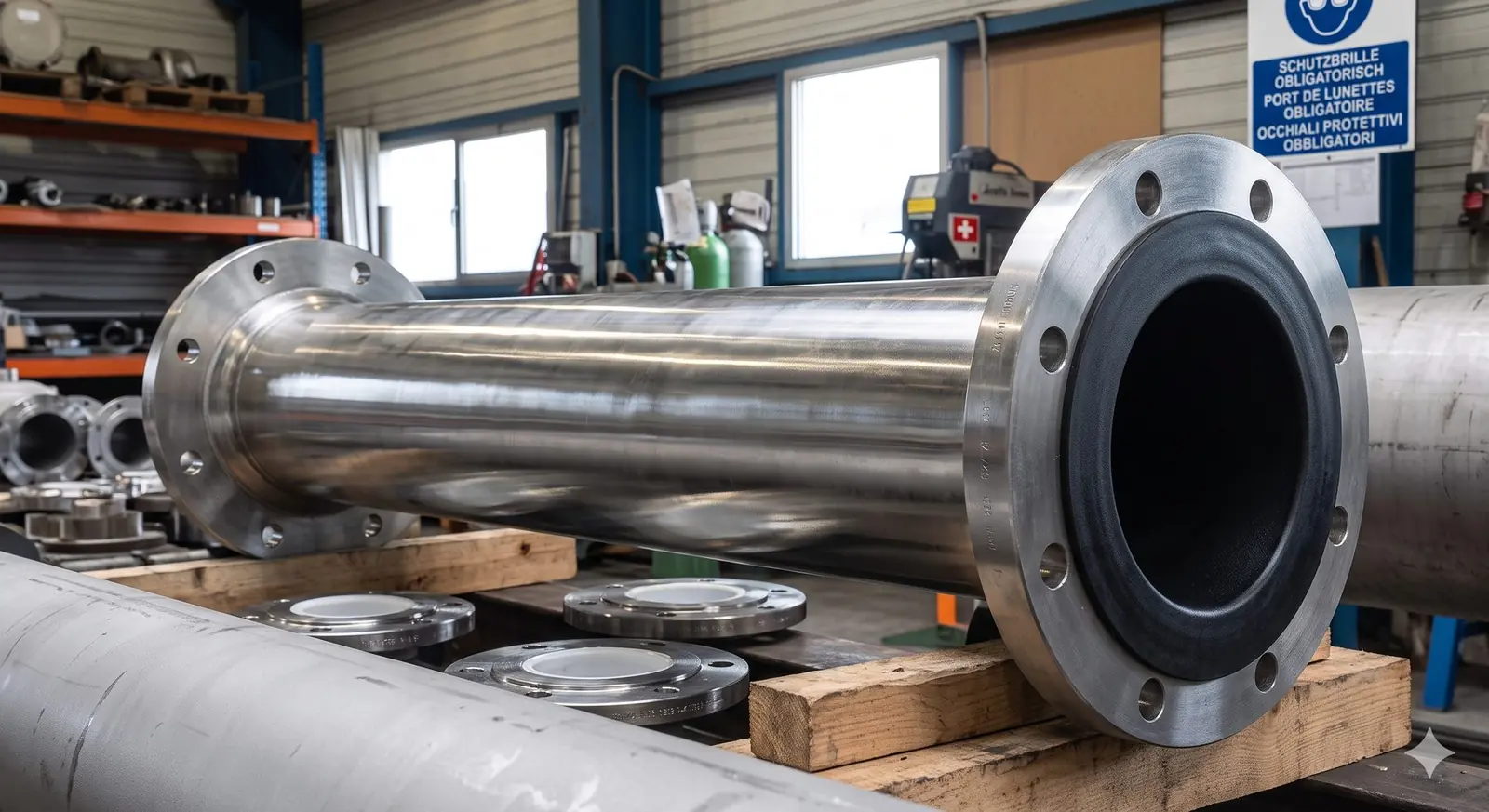
The strength of steel on the outside, the chemical resistance of PTFE on the inside. We design, install and maintain PTFE-lined piping with flared ends for chemical and pharma plants in the Basel region.
PTFE-lined lines are the solution when even Hastelloy reaches its limits or when cost-effectiveness requires it:
hydrochloric acid, hydrofluoric acid, chlorine, bromine, alkalis and solvents in high concentration.
product lines where no metal contact is permitted.
neutralisation, scrubbers, acid recovery.
A PTFE-lined pipe consists of a steel pipe (carbon steel or stainless steel), which takes the pressure, and a PTFE liner, which carries the medium. At the ends the liner is flared over the flange, so that the sealing face is also made of PTFE and the medium never comes into contact with steel.
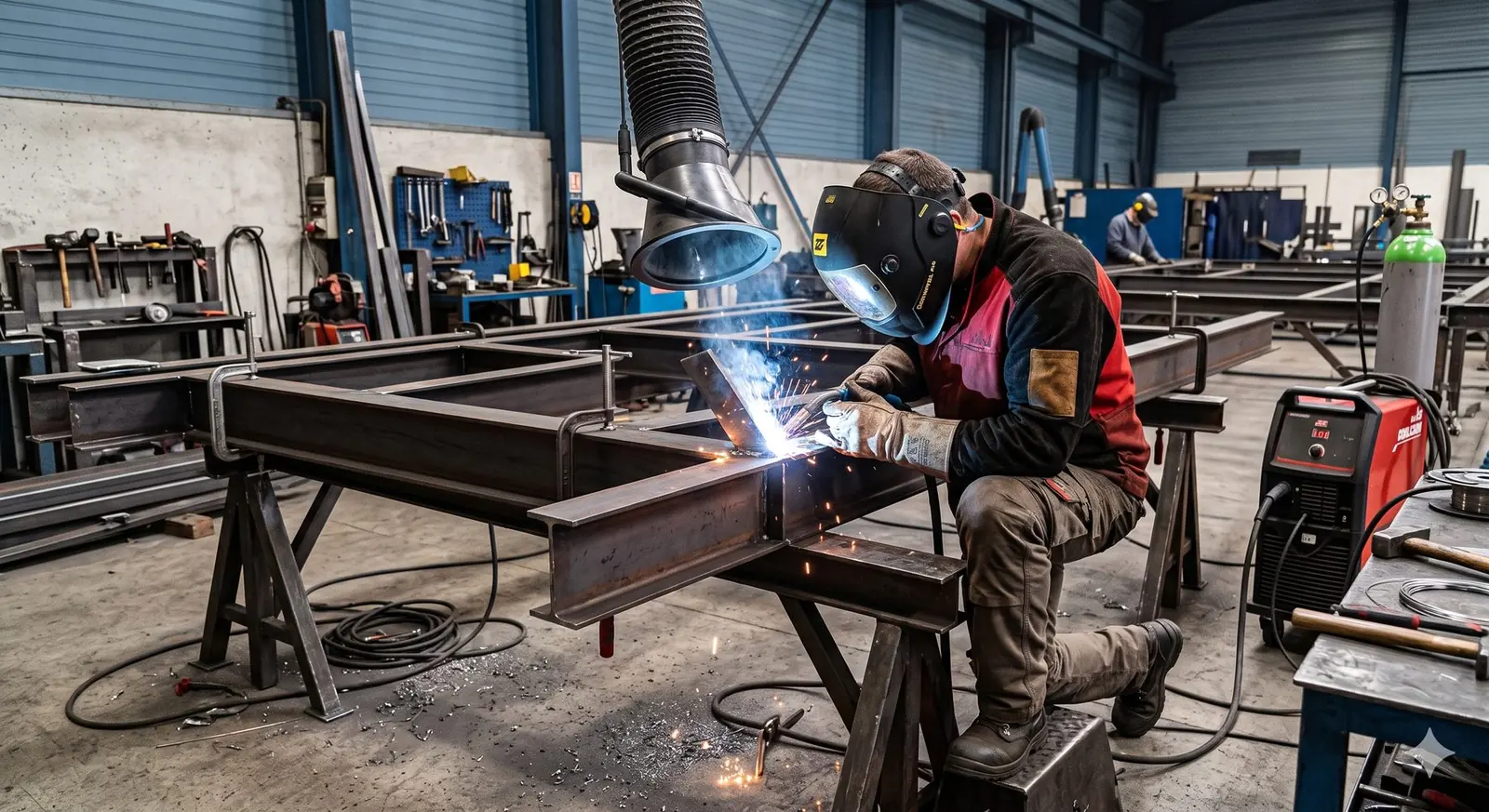
Because the liner is not welded, a PTFE line is made up of prefabricated pipe sections, elbows, tees and reducers that are joined by flanges. Our job is to design these flange runs, the exact dimensional chain, installation with the correct tightening torques, and the leak test. On the steel side we weld pipe supports, connections and transitions to metallic sections.
Limits of the system: temperature and vacuum. We check with you whether standard PTFE, antistatic PTFE or a vacuum-resistant liner is needed.
medium, temperature, pressure, vacuum, antistatic requirement.
isometric with every pipe section and every gasket, dimensional chain, make-up pieces.
lined pipe sections and fittings from the manufacturer, with certificate.
aligning, tightening according to the torque table, retightening as specified.
test report, marking, documentation.
replacement of individual pieces, gasket changes, extension.
Hohenrainstrasse 10b, 4133 Pratteln · Mon–Fri 07:00–12:00 and 13:00–16:00